Exam 1
This practice exam includes both math and reading comprehension sections.
Exam Instructions
- This practice exam simulates the format of the actual Electrical aptitude test
- You will have questions from both the math and reading sections
- Each section should be timed for 50 minutes
- Take a 10-15 minute break between the sections
- Only use scratch paper- no calculator
Reset all selected answers to start over.
Section 1: Mathematics
Pattern Recognition
Find the pattern in each sequence and determine what number comes next.
1. What number comes next in this sequence?
\(4, 7, 1, 10, -2, ?\)
2. What number comes next in this sequence?
\(2, 4, 8, 16, 32, 64, ?\)
3. What number comes next in this sequence?
\(6, 9, 7, 10, 8, ?\)
4. What number comes next in this sequence?
\(1, 3, 0, 4, -1, ?\)
5. What number comes next in this sequence?
\(8, 5, 9, 4, 10, ?\)
Multivariate Formulas
6. If
\[u = \frac{3v}{2w}\]
where \(v = 8\) and \(w = 6\), what is the value of \(u\)?
7. If
\[g = \frac{f^2}{4d}\]
where \(f = 6\) and \(d = 3\), what is the value of \(g\)?
8. If
\[e = \frac{\sqrt{3t}}{k/2}\]
where \(t = 12\) and \(k = 3\), what is the value of \(e\)?
9. If
\[m = \frac{3(n - 2)}{4p}\]
where \(n = 10\) and \(p = 3\), what is the value of \(m\)?
10. Simplify the following expression:
\[s = (4p^2 - 3p + 7) - (2p^2 + 5p - 3)\]
11. Simplify the following expression:
\[s = (w^2 + 2v + r) + \frac{w^2 - 3vw}{w}\]
12. If
\[g = \frac{\sqrt{8f}}{d}\]
where \(f = 8\) and \(d = 2\), what is the value of \(g\)?
13. If
\[e = \frac{4(t + 1)}{3k + w}\]
where \(t = 5\), \(k = 2\), and \(w = 4\), what is the value of \(e\)?
14. If
\[m = \frac{6n}{2p + q}\]
where \(n = 7\), \(p = 2\), and \(q = 2\), what is the value of \(m\)?
15. If
\[i = \frac{3j - 6}{2j + k}\]
where \(j = 4\) and \(k = 2\), what is the value of \(i\)?
Variable Relationships
For each question, one variable is held constant. Determine how the dependent variable changes as the independent variable changes.
16. Given the formula
\[y = \frac{z - x}{z} + 5\]
where \(x\) is held constant, as \(z\) increases, what happens to \(y\)?
17. Given the formula
\[b = \frac{(a - 3)(c + 2)}{\sqrt{c}}\]
where \(c\) is held constant, as \(a\) increases, what happens to \(b\)?
18. Given the formula
\[p = \frac{m \cdot n}{m + k}\]
where \(k\) and \(n\) are held constant, as \(m\) changes, what happens to \(p\)?
19. Given the formula
\[u = \frac{v^2}{v + w}\]
where \(w\) is held constant, as \(v\) increases, what happens to \(u\)?
2D Graphing and Inequalities
For each equation, determine which statement about the relationship between the variables is true.
20. Given the equation
\[3m = n - 2\]
which of the following statements is true?
21. Given the equation
\[2x = y + 5\]
which of the following statements is true?
22. Given the equation
\[4p = q - 8\]
which of the following statements is true?
23. Given the equation
\[5a = b + 10\]
which of the following statements is true?
24. Given the equation
\[3c = d - 6\]
which of the following statements is true?
Factoring
Expand the factored expressions or identify the correct factored form.
25. Expand: \((3g - 4)(g + 2)\)
26. Expand: \((2u - 5)(u + 3)\)
27. Expand: \((4w - 3x)(2w - 3)\)
28. Expand: \((5y - 2z)(y - 4z)\)
29. Expand: \((6a - b)(2a + 5b)\)
30. Factor: \(4p^2 - 9pq - 9q^2\)
Multiple Representations
Match the given representation with the equivalent form from the answer choices.
31. The statement "y is 3 times x divided by the sum of x and 5" is equivalent to which of the following?
32. The following table represents which relationship?
| \(x\) | \(y\) |
|---|---|
| -2 | -1 |
| -1 | 1 |
| 0 | 3 |
| 1 | 5 |
| 2 | 7 |
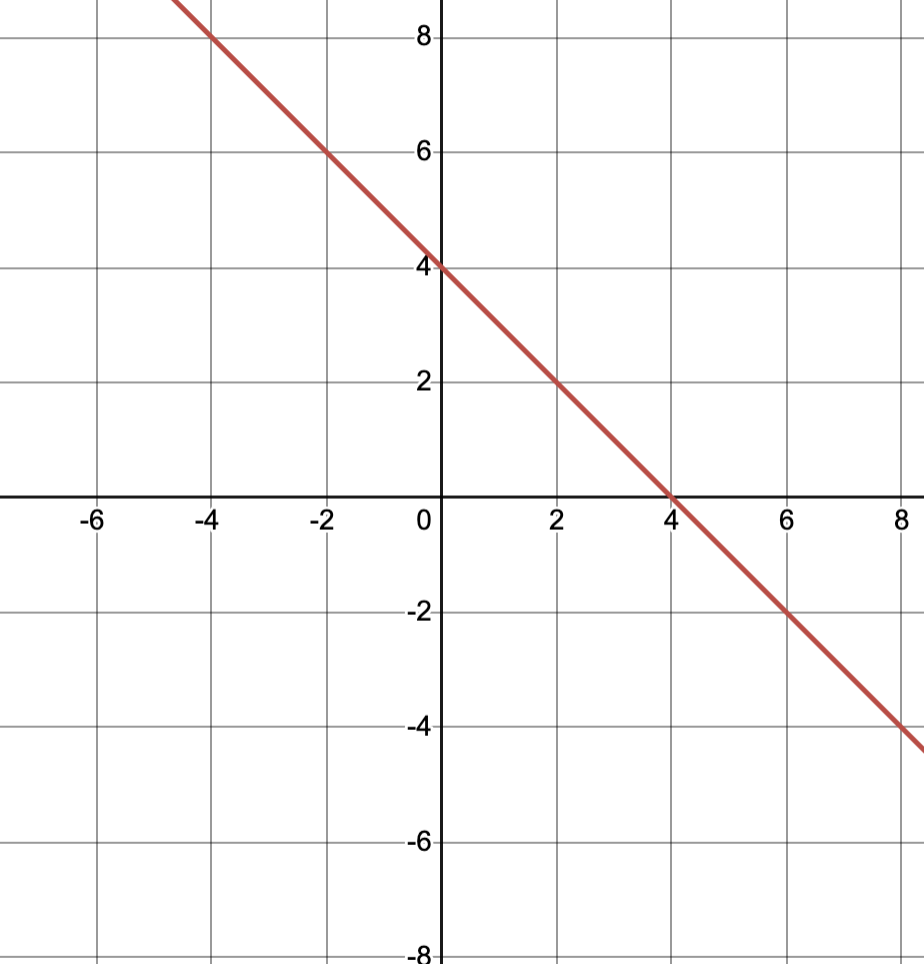
33. The following graph represents which of the following choices?
34. The equation \(y = x^2 - 4\) is best represented by which of the following choices?
Section 2: Reading Comprehension
Passage 1: World War 1
World War I, also known as the Great War, began in 1914 and lasted until 1918. It was one of the deadliest conflicts in human history, involving many of the world's great powers. The war originated in Europe but eventually spread to other continents, drawing in nations from around the globe.
The immediate cause of the war was the assassination of Archduke Franz Ferdinand of Austria-Hungary in Sarajevo on June 28, 1914. However, underlying tensions had been building for decades. European nations had formed complex alliances, creating two main opposing groups: the Triple Entente (France, Russia, and Britain) and the Triple Alliance (Germany, Austria-Hungary, and Italy). These alliances meant that when one country went to war, its allies were obligated to join.
Nationalism was a powerful force driving the conflict. Many European nations believed in their cultural and military superiority. This sense of national pride, combined with competition for colonies and resources, created an atmosphere of suspicion and rivalry. Countries built up their armies and navies, preparing for potential conflict.
Imperialism also played a significant role. European powers competed for colonies in Africa, Asia, and other regions. This competition for territory and resources increased tensions between nations. The desire to expand empires and control valuable resources contributed to the growing hostility.
Military technology had advanced significantly by 1914, but military tactics had not kept pace. This led to devastating new forms of warfare. Machine guns, artillery, poison gas, and later tanks and aircraft changed the nature of combat. Soldiers found themselves fighting in trenches, facing conditions that previous generations could not have imagined.
Trench warfare became the dominant form of combat on the Western Front. Soldiers dug elaborate networks of trenches stretching from the English Channel to Switzerland. Life in the trenches was miserable, with soldiers facing mud, disease, rats, and constant danger from enemy fire. Attacks across "no man's land" between trenches often resulted in massive casualties for little territorial gain.
The war affected civilians as well as soldiers. Governments mobilized entire economies for the war effort. Women entered the workforce in large numbers, taking jobs traditionally held by men who had gone to fight. Rationing became common as resources were diverted to military use. Propaganda campaigns encouraged support for the war and demonized the enemy.
The United States initially remained neutral but entered the war in 1917. Several factors influenced this decision, including German submarine warfare that threatened American shipping and the interception of a message suggesting Germany was trying to form an alliance with Mexico against the United States. American involvement helped tip the balance in favor of the Allies.
The war ended with an armistice on November 11, 1918. The Treaty of Versailles, signed in 1919, officially ended the war and imposed harsh terms on Germany. The war had profound consequences, including the collapse of several empires, the redrawing of national boundaries, and the creation of new nations. The conflict also set the stage for World War II, as the harsh terms imposed on Germany contributed to economic hardship and political instability.
1. According to the passage, when did World War I begin?
2. The passage states that the immediate cause of World War I was:
3. According to the passage, the two main opposing groups were:
4. The passage indicates that trench warfare was the dominant form of combat on:
5. In the context of the passage, what does the word "armistice" most likely mean?
6. The passage suggests that the alliances between European nations meant that:
7. Based on the passage's description of trench warfare, what can be inferred about the conditions soldiers faced?
8. The passage's discussion of how military technology had advanced significantly by 1914 but military tactics had not kept pace, combined with the description of devastating new weapons and trench warfare, suggests that:
9. Based on the passage's description of how the war affected civilians (women entering the workforce, rationing, propaganda campaigns) and the statement that the war "set the stage for World War II," what can be inferred about the broader impact of World War I?
Passage 2: Basic Electrical Principles
Understanding basic electrical principles is fundamental to working safely and effectively in the electrical trade. These principles form the foundation for all electrical work, from simple residential wiring to complex industrial installations.
Electricity is the flow of electrons through a conductor. For electricity to flow, there must be a complete circuit, which means there must be a path for electrons to travel from a source, through a load, and back to the source. A circuit that is not complete is called an open circuit, and no current will flow through it. A circuit that provides an unintended path for current, bypassing the load, is called a short circuit and can be extremely dangerous.
Voltage, measured in volts, is the electrical pressure that pushes electrons through a circuit. Think of voltage like water pressure in a pipe—it provides the force that makes the water flow. Current, measured in amperes or amps, is the actual flow of electrons through the circuit. Resistance, measured in ohms, is the opposition to the flow of current. These three quantities are related by Ohm's Law, which states that voltage equals current multiplied by resistance.
Electrical power, measured in watts, is the rate at which electrical energy is used or produced. Power is calculated by multiplying voltage by current. This relationship is important for understanding how much electrical load a circuit can safely handle. Overloading a circuit by connecting too many devices can cause the circuit to overheat, potentially leading to fires or equipment damage.
There are two main types of electrical current: direct current (DC) and alternating current (AC). Direct current flows in one direction only, like the current from a battery. Alternating current changes direction periodically, which is how electricity is delivered to homes and businesses. Most electrical systems in buildings use AC because it can be easily transformed to different voltage levels and transmitted over long distances more efficiently than DC.
Electrical circuits can be connected in series or parallel. In a series circuit, components are connected one after another, so the same current flows through each component. If one component fails in a series circuit, the entire circuit stops working. In a parallel circuit, components are connected side by side, so each component receives the full voltage. If one component fails in a parallel circuit, the other components continue to work. Most electrical systems use parallel circuits because they provide more reliable operation.
Grounding and bonding are critical safety features in electrical systems. Grounding provides a safe path for electrical current to flow to the earth in the event of a fault. This helps prevent electric shock and protects equipment from damage. Bonding connects all metal parts of an electrical system together to ensure they are at the same electrical potential, preventing dangerous voltage differences that could cause shocks or sparks.
Circuit protection devices, such as fuses and circuit breakers, are designed to interrupt the flow of electricity when too much current flows through a circuit. These devices protect circuits from overloads and short circuits. Fuses work by melting when too much current flows, breaking the circuit. Circuit breakers work by tripping a switch mechanism when excessive current is detected. Both devices must be properly sized for the circuit they protect to function correctly.
Understanding these basic principles helps electrical workers troubleshoot problems, design safe installations, and work efficiently. When workers understand how electricity behaves, they can make better decisions about circuit design, equipment selection, and safety practices. This knowledge also helps workers identify potential problems before they become serious safety hazards.
10. According to the passage, for electricity to flow, there must be:
11. The passage compares voltage to:
12. According to the passage, overloading a circuit can cause:
13. The passage states that most electrical systems in buildings use AC because:
14. According to the passage, in a parallel circuit, if one component fails:
15. In the context of the passage, what does the word "troubleshoot" most likely mean?
16. According to the passage, circuit breakers protect circuits by:
17. The passage's explanation of how voltage, current, and resistance relate through Ohm's Law, and how power is calculated from voltage and current, suggests that understanding these relationships:
18. Based on the passage's discussion of grounding, bonding, and circuit protection devices working together, what can be inferred about electrical safety systems?
Passage 3: Ocean Health
The health of the world's oceans is critical to life on Earth. Oceans cover more than 70 percent of the planet's surface and play essential roles in regulating climate, providing food, and supporting biodiversity. However, human activities are placing increasing pressure on marine ecosystems, threatening their ability to function properly.
One of the most significant threats to ocean health is pollution. Chemical pollutants from industrial activities, agricultural runoff, and urban areas find their way into oceans through rivers and direct discharge. These chemicals can harm marine life, accumulate in food chains, and make seafood unsafe for human consumption. Plastic pollution has become particularly problematic, with millions of tons of plastic waste entering the oceans each year.
Plastic waste poses multiple threats to marine ecosystems. Large plastic items can entangle marine animals, causing injury or death. Smaller plastic fragments, known as microplastics, are ingested by marine organisms and can work their way up the food chain. These microplastics can carry toxic chemicals and may cause physical harm to animals that consume them. The problem is so widespread that plastic has been found in the deepest ocean trenches and the most remote areas.
Overfishing is another major concern. When fish populations are harvested faster than they can reproduce, populations decline. This affects not only the targeted species but also the entire marine food web. Predators lose their food sources, and the balance of marine ecosystems is disrupted. Some fishing methods, such as bottom trawling, also damage seafloor habitats, destroying coral reefs and other important marine environments.
Climate change is having profound effects on ocean health. Rising sea temperatures are causing coral bleaching, where corals expel the algae that provide them with food and color. Without these algae, corals turn white and may die. Ocean acidification, caused by the absorption of carbon dioxide from the atmosphere, makes it harder for marine organisms like shellfish and corals to build their shells and skeletons. These changes threaten entire ecosystems that depend on these organisms.
Habitat destruction is also a serious problem. Coastal development, dredging, and other human activities destroy important marine habitats like mangroves, seagrass beds, and coral reefs. These habitats serve as nurseries for many fish species and provide protection from storms. When these habitats are lost, fish populations decline, and coastal areas become more vulnerable to erosion and storm damage.
Despite these challenges, there are efforts underway to protect and restore ocean health. Marine protected areas are being established to safeguard important ecosystems. International agreements aim to reduce pollution and regulate fishing. Research is helping scientists better understand marine ecosystems and develop strategies for conservation.
Individual actions also matter. Reducing plastic use, choosing sustainable seafood, and supporting conservation efforts can all contribute to healthier oceans. Education and awareness are crucial, as understanding the importance of ocean health can motivate people to take action. The choices we make today will determine the health of oceans for future generations.
Protecting ocean health requires coordinated efforts at local, national, and international levels. It involves balancing human needs with the needs of marine ecosystems. While the challenges are significant, the importance of healthy oceans makes these efforts essential. The future of both marine life and human communities that depend on the ocean depends on our ability to address these threats effectively.
19. In the context of the passage, what does the word "sustainable" most likely mean?
20. The passage states that one of the most significant threats to ocean health is:
21. According to the passage, what happens during coral bleaching?
22. The passage indicates that ocean acidification makes it harder for marine organisms to:
23. In the context of the passage, what does the word "biodiversity" most likely mean?
24. The passage suggests that plastic waste affects marine ecosystems in multiple ways, including:
25. In the context of the passage, what does the word "vulnerable" most likely mean?
26. The passage's discussion of multiple interconnected threats (pollution, overfishing, climate change, habitat destruction) and their cumulative effects on marine ecosystems suggests that:
27. Based on the passage's emphasis on the importance of oceans for climate regulation, food provision, and biodiversity, combined with the statement that "the future of both marine life and human communities that depend on the ocean depends on our ability to address these threats effectively," what can be inferred about the relationship between ocean health and human well-being?
Passage 4: Data Centers and What They Do
Data centers are specialized facilities that house computer systems and associated components, such as telecommunications and storage systems. They are the physical foundation of the digital world, enabling the internet, cloud computing, and countless online services that people use every day.
At their core, data centers contain thousands of servers—powerful computers designed to process, store, and transmit data. These servers are organized in rows of racks, with each rack containing multiple servers stacked vertically. The servers are connected through complex networks of cables and switches that allow them to communicate with each other and with the outside world.
One of the most critical aspects of data center operation is maintaining the right environmental conditions. Servers generate enormous amounts of heat, and if this heat is not removed, the equipment can overheat and fail. Data centers use sophisticated cooling systems, including air conditioning, liquid cooling, and ventilation systems, to maintain optimal temperatures. Humidity must also be controlled, as too much or too little moisture can damage electronic equipment.
Power is another essential requirement. Data centers consume massive amounts of electricity to run servers, cooling systems, and other equipment. A large data center can use as much electricity as a small city. To ensure continuous operation, data centers typically have backup power systems, including generators and battery systems, that can take over if the main power supply fails. Uninterruptible power supplies provide immediate backup power during brief outages, giving generators time to start.
Security is paramount in data centers. Physical security measures include restricted access, surveillance systems, and security personnel. Only authorized personnel can enter data center facilities, and their access is carefully monitored and logged. Cybersecurity measures protect the data and systems from digital threats. Fire suppression systems are also essential, as fires can cause catastrophic damage to equipment and data.
Data centers provide various services depending on their purpose. Some data centers are owned and operated by large technology companies to support their own services, such as social media platforms, search engines, or cloud computing services. Other data centers are colocation facilities, where multiple organizations rent space to house their own servers. There are also data centers that provide hosting services, running applications and websites for clients.
The location of a data center is strategically important. Many data centers are located near sources of cheap electricity, as power costs are a major operating expense. Some are built in areas with cool climates to reduce cooling costs. Others are positioned near major internet exchange points to reduce latency—the time it takes for data to travel between locations. Proximity to customers can also be important for services that require fast response times.
Data centers are constantly evolving to meet increasing demands for computing power and data storage. As more people and devices connect to the internet, and as new technologies like artificial intelligence and the Internet of Things grow, the need for data center capacity continues to expand. This growth drives innovation in server design, cooling technologies, and energy efficiency.
Efficiency is a major focus for modern data centers. Improving energy efficiency reduces operating costs and environmental impact. Data centers measure their efficiency using metrics like Power Usage Effectiveness, which compares total energy use to energy used by IT equipment. Many data centers are working to increase their use of renewable energy sources and improve their overall environmental footprint.
28. According to the passage, what are data centers?
29. The passage states that servers in data centers are organized in:
30. According to the passage, why do data centers need cooling systems?
31. The passage indicates that data centers typically have backup power systems to:
32. In the context of the passage, what does the word "paramount" most likely mean?
33. The passage suggests that the location of a data center is strategically important because:
34. Based on the passage's description of different types of data centers (company-owned, colocation facilities, hosting services), what can be inferred about data center services?
35. The passage's discussion of how data centers must maintain environmental conditions (temperature, humidity), provide reliable power (with backup systems), ensure security (physical and cyber), and manage location strategically, combined with the statement that they are "the physical foundation of the digital world," suggests that:
36. Based on the passage's description of increasing demands for computing power, the growth of technologies like AI and IoT, and the focus on efficiency and environmental impact, what can be inferred about the future challenges facing data centers?
Click to see your results and review missed questions.
Reset all selected answers to start over.