Exam 2
This practice exam includes both math and reading comprehension sections.
Exam Instructions
- This practice exam simulates the format of the actual Electrical aptitude test
- You will have questions from both the math and reading sections
- Each section should be timed for 50 minutes
- Take a 10-15 minute break between the sections
- Only use scratch paper- no calculator
Reset all selected answers to start over.
Section 1: Mathematics
Pattern Recognition
Find the pattern in each sequence and determine what number comes next.
1. What number comes next in this sequence?
\(5, 8, 12, 17, 23, ?\)
2. What number comes next in this sequence?
\(2, 3, 6, 18, 108, ?\)
3. What number comes next in this sequence?
\(12, 4, 14, 6, 16, ?\)
4. What number comes next in this sequence?
\(3, 6, 2, 7, 1, ?\)
5. What number comes next in this sequence?
\(3, -1, -6, -12, -19, ?\)
Multivariate Formulas
6. If
\[w = \frac{4u}{3v}\]
where \(u = 9\) and \(v = 4\), what is the value of \(w\)?
7. If
\[d = \frac{g^2}{3f}\]
where \(g = 9\) and \(f = 9\), what is the value of \(d\)?
8. If
\[k = \frac{\sqrt{5e}}{t/2}\]
where \(e = 20\) and \(t = 4\), what is the value of \(k\)?
9. If
\[p = \frac{5(m + 3)}{2n}\]
where \(m = 5\) and \(n = 10\), what is the value of \(p\)?
10. Simplify the following expression:
\[j = (3x^2 - 2x + 5) - (x^2 + 4x - 3)\]
11. Simplify the following expression:
\[j = (x^2 + 3y + 4) + \frac{x^2 - 2yx}{x}\]
12. If
\[f = \frac{\sqrt{12g}}{d}\]
where \(g = 12\) and \(d = 3\), what is the value of \(f\)?
13. If
\[t = \frac{6(e - 1)}{4k + w}\]
where \(e = 9\), \(k = 3\), and \(w = 4\), what is the value of \(t\)?
14. If
\[n = \frac{8m}{3p + q}\]
where \(m = 9\), \(p = 2\), and \(q = 3\), what is the value of \(n\)?
15. If
\[i = \frac{4j + 8}{3j + k}\]
where \(j = 6\) and \(k = -2\), what is the value of \(i\)?
Variable Relationships
For each question, one variable is held constant. Determine how the dependent variable changes as the independent variable changes.
16. Given the formula
\[f = \frac{h - g}{g} + 2\]
where \(h\) is held constant, as \(g\) increases, what happens to \(f\)?
17. Given the formula
\[r = \frac{(s - 4)(t + 5)}{\sqrt{t}}\]
where \(t\) is held constant, as \(s\) changes, what happens to \(r\)?
18. Given the formula
\[q = \frac{e \cdot (f - d)}{d}\]
where \(e\) and \(f\) are held constant, as \(d\) increases, what happens to \(q\)?
19. Given the formula
\[x = \frac{y}{y^2 + z}\]
where \(z\) is held constant and \(y\) is greater than \(z\), as \(y\) increases, what happens to \(x\)?
2D Graphing and Inequalities
For each equation, determine which statement about the relationship between the variables is true.
20. Given the equation
\[4r = s + 6\]
which of the following statements is true?
21. Given the equation
\[3u = v - 9\]
which of the following statements is true?
22. Given the equation
\[6h = k - 12\]
which of the following statements is true?
23. Given the equation
\[7t = w + 14\]
which of the following statements is true?
24. Given the equation
\[2f = g - 4\]
which of the following statements is true?
Factoring
Expand the factored expressions or identify the correct factored form.
25. Expand: \((7k - 3)(k + 2)\)
26. Expand: \((3r - 4)(2r - 2)\)
27. Expand: \((5t - 2u)(t + 4)\)
28. Expand: \((4i - 5j)(3i - 2j)\)
29. Expand: \((8c - d)(c + e)\)
30. Factor: \(6m^2 - 7mn - 5n^2\)
Multiple Representations
Match the given representation with the equivalent form from the answer choices.
31. The statement "y is 2 times x plus 3, all divided by x" is equivalent to which of the following?
32. The following table represents which relationship?
| \(x\) | \(y\) |
|---|---|
| -1 | -5 |
| 0 | -2 |
| 1 | 1 |
| 2 | 4 |
| 3 | 7 |
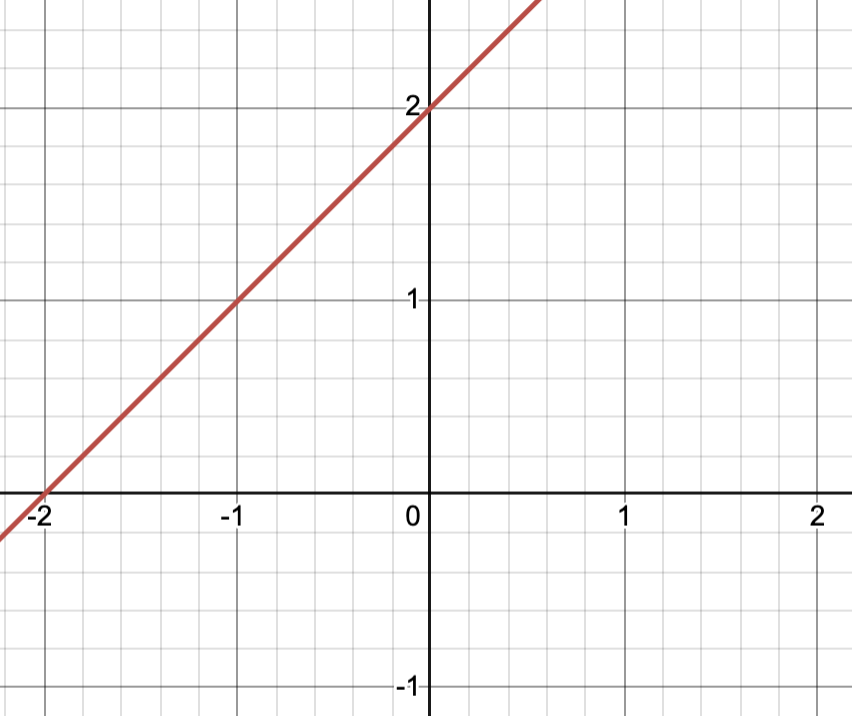
33. The following graph represents which equation?
34. The equation \(y = 2x + 5\) is best represented by which statement?
Section 2: Reading Comprehension
Passage 1: Labor Struggles in American History
The history of American labor is marked by intense struggles, violent confrontations, and hard-won victories that have shaped the working conditions we enjoy today. From the late 19th century through the mid-20th century, workers organized, protested, and sometimes fought physically to secure basic rights and protections that many now take for granted.
One of the most significant early labor conflicts was the Great Railroad Strike of 1877, which began when railroad companies cut workers' wages during an economic depression. The strike quickly spread across the country, with workers in multiple cities walking off the job. In several locations, the conflict turned violent. In Pittsburgh, for example, striking workers clashed with state militia, resulting in numerous deaths and the destruction of railroad property. Federal troops were eventually called in to restore order, but the strike demonstrated the power of collective action and the lengths to which workers would go to protect their livelihoods.
The Haymarket Affair of 1886 in Chicago represents another pivotal moment in labor history. What began as a peaceful rally in support of an eight-hour workday ended in tragedy when a bomb was thrown at police officers, leading to a violent confrontation. The incident resulted in the deaths of both police and civilians. Although the connection between the labor organizers and the bomb was never conclusively proven, several labor leaders were tried and executed. This event created a lasting association between labor movements and violence in the public mind, making it more difficult for unions to gain public support.
The Pullman Strike of 1894 further illustrated the tensions between labor and management. Workers at the Pullman Palace Car Company went on strike to protest wage cuts and poor working conditions. The strike spread when the American Railway Union, led by Eugene Debs, refused to handle Pullman cars. The federal government intervened, using the Sherman Antitrust Act to break the strike and sending in troops. Debs was jailed, but the strike highlighted the need for better labor protections and helped build momentum for future labor reforms.
Violent confrontations continued into the 20th century. The Ludlow Massacre of 1914 in Colorado saw state militia and private security forces attack a tent colony of striking coal miners and their families. The attack resulted in the deaths of over 20 people, including women and children. This brutal event shocked the nation and brought attention to the dangerous conditions faced by miners and the extreme measures companies would take to break strikes.
Despite these violent episodes, labor organizations continued to grow and fight for workers' rights. The 1930s saw a surge in union membership and labor activism, partly in response to the Great Depression. The passage of the National Labor Relations Act in 1935, also known as the Wagner Act, was a major victory for organized labor. This legislation guaranteed workers the right to organize, form unions, and bargain collectively with employers. It also established the National Labor Relations Board to oversee union elections and investigate unfair labor practices.
The labor struggles of the past have directly contributed to many benefits that workers enjoy today. The eight-hour workday, which was a central demand in many early labor conflicts, is now standard in most industries. Weekend rest periods, another hard-won victory, provide workers with time for rest and family. Overtime pay, which compensates workers for hours beyond the standard workweek, was established through labor advocacy and is now protected by federal law.
Workplace safety regulations, which help prevent injuries and deaths on the job, were largely the result of labor organizing and pressure on employers and government. Workers' compensation programs, which provide financial support to workers injured on the job, were also achieved through labor activism. These protections save lives and prevent financial ruin for countless workers and their families.
Today's workers may not realize that the relative stability and security they experience in the workplace came at a great cost. The benefits of paid time off, health insurance, retirement plans, and protection from arbitrary dismissal are all legacies of the labor movement. While labor struggles continue in various forms, the foundation of workers' rights that was built through decades of organizing, striking, and sometimes fighting provides the framework for modern employment relationships.
1. The passage implies that the Great Railroad Strike of 1877 was significant because it:
2. The passage indicates that the Haymarket Affair:
3. In the context of the passage, what does the word "livelihoods" most likely mean?
4. The passage states that the Ludlow Massacre was particularly shocking because:
5. Based on the passage's discussion of the 1930s and the National Labor Relations Act, what can be inferred about the relationship between economic conditions and labor legislation?
6. The passage suggests that the author's primary purpose is to:
7. In the context of the passage, what does the word "arbitrary" most likely mean?
8. The passage indicates that the tone of labor conflicts changed over time in what way?
9. The passage suggests that modern workers might not fully appreciate:
Passage 2: The Development of the Atomic Bomb
The development of the atomic bomb during World War II represents one of the most significant scientific and engineering achievements in human history. This project, known as the Manhattan Project, brought together some of the world's greatest scientific minds to solve an unprecedented challenge under extreme pressure and secrecy.
The theoretical foundation for atomic weapons was laid in the early 20th century through the work of physicists like Albert Einstein, whose famous equation E=mc² demonstrated the relationship between mass and energy. In 1939, Einstein and other scientists wrote a letter to President Franklin Roosevelt warning that Nazi Germany might be developing atomic weapons. This warning prompted the United States to begin its own atomic research program, which would eventually become the Manhattan Project.
The project was massive in scope, involving hundreds of thousands of workers across multiple sites. The main research and development facility was located in Los Alamos, New Mexico, under the direction of physicist J. Robert Oppenheimer. Scientists there worked on designing and building the actual bombs, while other facilities focused on producing the necessary nuclear materials. Oak Ridge, Tennessee, was responsible for enriching uranium, while Hanford, Washington, produced plutonium through nuclear reactors.
One of the greatest challenges was producing sufficient quantities of fissile material. Natural uranium contains only a tiny fraction of the isotope uranium-235, which is necessary for a nuclear chain reaction. Separating this rare isotope from the more common uranium-238 required enormous industrial facilities and innovative techniques. The scientists and engineers developed multiple methods, including electromagnetic separation and gaseous diffusion, to enrich uranium to the levels needed for a bomb.
Plutonium production presented different challenges. Scientists needed to build and operate nuclear reactors that could produce plutonium-239 from uranium-238. This process had never been done on an industrial scale before. The reactors at Hanford were among the first large-scale nuclear reactors ever built, and they required constant monitoring and adjustment by teams of scientists and engineers working around the clock.
The scientists working on the project faced numerous technical obstacles. They had to determine the exact amount of fissile material needed to achieve a critical mass and sustain a chain reaction. Too little material, and the reaction would fizzle out. Too much, and the bomb could detonate prematurely during assembly. The scientists conducted extensive calculations and small-scale experiments to determine these critical parameters, often working with incomplete information and under tremendous time pressure.
Beyond the technical challenges, the scientists also grappled with profound ethical questions. Many of the researchers, including Oppenheimer, were deeply conflicted about creating such a destructive weapon. They understood that the atomic bomb could end the war and save lives, but they also recognized that it would cause unprecedented destruction and potentially change the nature of warfare forever. Some scientists, like Leo Szilard, actively campaigned against using the bomb on civilian populations, while others believed it was necessary to end the war quickly.
The first successful test of an atomic bomb, code-named Trinity, took place on July 16, 1945, in the New Mexico desert. The explosion created a fireball brighter than the sun and a mushroom cloud that rose over 40,000 feet into the atmosphere. Witnesses described the experience as both awe-inspiring and terrifying. Oppenheimer later recalled a line from Hindu scripture: "Now I am become Death, the destroyer of worlds." The test confirmed that the scientists had successfully created a weapon of unprecedented power.
The successful development of the atomic bomb had immediate and lasting consequences. The bombs dropped on Hiroshima and Nagasaki in August 1945 led to Japan's surrender and the end of World War II. However, the project also ushered in the nuclear age, with all its attendant risks and responsibilities. The scientists who built the bomb had created something that would shape international relations, military strategy, and global security for decades to come. Their achievement demonstrated both the incredible potential of scientific collaboration and the weighty moral responsibilities that come with scientific knowledge.
10. The passage implies that the Manhattan Project was initiated primarily due to:
11. The passage's description of the Manhattan Project's organization across multiple sites suggests that:
12. In the context of the passage, what does the word "fissile" most likely mean?
13. The passage indicates that the scientists had to determine the exact amount of fissile material needed because:
14. According to the passage, many scientists working on the project were conflicted because:
15. In the context of the passage, what does the word "unprecedented" most likely mean?
16. Based on the passage, what can be inferred about the relationship between scientific knowledge and moral responsibility?
17. The passage implies that the development of the atomic bomb had which long-term effect?
18. The passage suggests that the tone of Oppenheimer's quote "Now I am become Death, the destroyer of worlds" reflects:
Passage 3: Cognitive Behavioral Therapy
Cognitive Behavioral Therapy, commonly known as CBT, is a widely used and extensively researched form of psychotherapy that focuses on the relationship between thoughts, feelings, and behaviors. Developed in the 1960s by psychiatrist Aaron Beck, CBT is based on the fundamental principle that our thoughts influence our emotions and actions, and that by changing maladaptive thought patterns, we can improve our emotional well-being and behavior.
The core concept of CBT is the cognitive triangle, which illustrates how thoughts, feelings, and behaviors are interconnected. According to this model, a situation triggers automatic thoughts, which then influence emotional responses and behavioral reactions. For example, if someone receives criticism at work, they might have the automatic thought "I'm terrible at my job," which could lead to feelings of sadness or anxiety, which might then cause them to avoid similar situations in the future. CBT helps individuals identify these automatic thoughts and examine whether they are accurate or helpful.
One of the key techniques in CBT is cognitive restructuring, which involves identifying and challenging negative or distorted thinking patterns. These patterns, known as cognitive distortions, include all-or-nothing thinking, where situations are viewed in black-and-white terms; catastrophizing, where the worst possible outcome is assumed; and overgeneralization, where a single negative event is seen as a never-ending pattern of defeat. Through cognitive restructuring, individuals learn to recognize these distortions and replace them with more balanced and realistic thoughts.
Behavioral techniques are also central to CBT. These include activity scheduling, where individuals plan and engage in pleasurable or meaningful activities to improve mood; exposure therapy, where people gradually confront feared situations to reduce anxiety; and behavioral experiments, where individuals test their beliefs through real-world actions. These techniques help people break patterns of avoidance and develop more adaptive behaviors.
CBT is typically a short-term, goal-oriented therapy, usually lasting between 12 and 20 sessions. The therapist and client work collaboratively to set specific, measurable goals and develop a treatment plan. Unlike some forms of therapy that focus primarily on exploring past experiences, CBT emphasizes the present and teaches practical skills that clients can use immediately. Homework assignments are a common feature of CBT, as they allow clients to practice new skills between sessions and apply what they've learned in their daily lives.
Research has consistently shown CBT to be effective for a wide range of mental health conditions. It has been proven effective for depression, anxiety disorders, post-traumatic stress disorder, obsessive-compulsive disorder, eating disorders, and substance use disorders, among others. The effectiveness of CBT is supported by hundreds of clinical trials, making it one of the most evidence-based forms of psychotherapy available.
One reason for CBT's effectiveness is its structured and systematic approach. The therapy follows a clear framework, with each session typically including a check-in, agenda setting, review of homework, introduction of new concepts or techniques, and assignment of new homework. This structure helps both therapist and client stay focused and track progress throughout treatment.
CBT also emphasizes skill-building and empowerment. Rather than viewing clients as passive recipients of treatment, CBT teaches them to become their own therapists. Clients learn to identify their thought patterns, challenge unhelpful beliefs, and implement behavioral changes independently. This focus on self-management helps ensure that the benefits of therapy continue long after treatment ends, as clients have the tools to handle future challenges on their own.
While CBT is highly effective for many people, it is not a one-size-fits-all solution. Some individuals may benefit more from other therapeutic approaches, and CBT may need to be adapted or combined with other treatments for certain conditions. Additionally, CBT requires active participation and effort from clients, which can be challenging for those who are severely depressed or lack motivation. However, for those who are willing to engage with the process, CBT offers a practical, evidence-based approach to improving mental health and well-being.
19. The passage's description of the cognitive triangle and automatic thoughts suggests that CBT's approach differs from other therapies primarily in its:
20. The passage's example of receiving criticism at work and having the automatic thought "I'm terrible at my job" demonstrates that the cognitive triangle:
21. In the context of the passage, what does the word "maladaptive" most likely mean?
22. The passage indicates that CBT typically lasts:
23. According to the passage, homework assignments in CBT are used to:
24. The passage states that CBT has been proven effective for all of the following EXCEPT:
25. In the context of the passage, what does the word "catastrophizing" most likely mean?
26. The passage suggests that CBT's structured approach contributes to its effectiveness by:
27. The passage indicates that CBT may not be suitable for everyone because:
Passage 4: Alcohol Use and Health Consequences
Alcohol abuse and dependence represent serious public health concerns with far-reaching consequences for individuals, families, and society. Understanding the negative health effects of excessive alcohol consumption is crucial for prevention, early intervention, and treatment. The impact of alcohol on the human body is complex and affects virtually every organ system.
The liver bears the primary burden of alcohol metabolism and is particularly vulnerable to alcohol-related damage. When alcohol is consumed, the liver works to break it down, but excessive drinking can overwhelm this organ's capacity. Alcohol-related liver disease progresses through several stages, beginning with fatty liver, where fat accumulates in liver cells. This condition is often reversible if alcohol consumption stops. However, continued heavy drinking can lead to alcoholic hepatitis, an inflammation of the liver that causes symptoms like jaundice, abdominal pain, and fever. The most severe form of alcohol-related liver disease is cirrhosis, where healthy liver tissue is replaced by scar tissue, leading to permanent liver damage and potentially liver failure.
Alcohol's effects on the cardiovascular system are complex and depend on consumption patterns. While moderate alcohol consumption has been associated with some potential cardiovascular benefits, heavy drinking significantly increases the risk of high blood pressure, irregular heartbeat, stroke, and cardiomyopathy, a condition where the heart muscle becomes weakened and enlarged. Chronic heavy drinking can also lead to an increased risk of heart attack, even in people who otherwise have no cardiovascular risk factors.
The brain and nervous system are particularly sensitive to alcohol's effects. Acute alcohol intoxication impairs judgment, coordination, and reaction time, which is why drunk driving is so dangerous. Chronic heavy drinking can cause permanent brain damage, including memory problems, difficulty with abstract thinking, and impaired problem-solving abilities. Alcohol-related brain damage can manifest as Wernicke-Korsakoff syndrome, a serious neurological disorder characterized by confusion, memory loss, and coordination problems. Additionally, alcohol withdrawal can be life-threatening, with symptoms ranging from anxiety and tremors to seizures and delirium tremens, a severe form of withdrawal that can cause hallucinations and cardiovascular collapse.
Alcohol abuse significantly increases the risk of various types of cancer. Research has established clear links between alcohol consumption and cancers of the mouth, throat, esophagus, liver, colon, and breast. The risk increases with the amount of alcohol consumed, and even moderate drinking has been associated with an elevated cancer risk. The mechanisms by which alcohol causes cancer are not fully understood, but it is believed that alcohol's breakdown products can damage DNA and interfere with the body's ability to repair this damage.
The digestive system suffers extensive damage from chronic alcohol abuse. Alcohol irritates the lining of the stomach and intestines, leading to inflammation, ulcers, and gastrointestinal bleeding. It can also interfere with the absorption of essential nutrients, particularly B vitamins and folic acid, leading to nutritional deficiencies. Pancreatitis, an inflammation of the pancreas, is another serious complication of heavy drinking that can cause severe abdominal pain and potentially life-threatening complications.
Alcohol's impact on the immune system makes heavy drinkers more susceptible to infections. Chronic alcohol consumption weakens the immune response, making it harder for the body to fight off bacteria and viruses. This increased susceptibility to infections can lead to more frequent illnesses, longer recovery times, and an increased risk of serious complications from common infections. Additionally, alcohol can interfere with the body's ability to heal from injuries and surgeries.
Mental health is also significantly affected by alcohol abuse. While some people drink to cope with anxiety or depression, alcohol actually worsens these conditions over time. Alcohol is a central nervous system depressant, and while it may provide temporary relief from negative feelings, it ultimately disrupts the brain's chemistry in ways that can lead to or exacerbate mood disorders. The relationship between alcohol and mental health is bidirectional—people with mental health conditions are more likely to abuse alcohol, and alcohol abuse can trigger or worsen mental health problems.
The social and economic consequences of alcohol abuse extend beyond individual health. Alcohol-related accidents, violence, lost productivity, and healthcare costs place enormous burdens on society. However, the most immediate and devastating consequences are often felt by individuals and their families. Understanding these health risks is essential for making informed decisions about alcohol consumption and for recognizing when professional help may be needed to address alcohol-related problems.
28. The passage's description of alcohol-related liver disease progression suggests that:
29. The passage's nuanced discussion of alcohol's cardiovascular effects suggests that:
30. The passage distinguishes between acute and chronic effects of alcohol on the brain, suggesting that:
31. The passage indicates that alcohol withdrawal can be:
32. In the context of the passage, what does the word "susceptible" most likely mean?
33. The passage's mention of alcohol interfering with nutrient absorption, particularly B vitamins and folic acid, suggests that this effect:
34. According to the passage, chronic alcohol consumption weakens the immune system by:
35. In the context of the passage, what does the word "bidirectional" most likely mean?
36. The passage suggests that the author's primary purpose is to:
Click to see your results and review missed questions.
Reset all selected answers to start over.